
There’s something about the bright, tangy burst of sunshine that a fresh spoonful of this Homemade Lemon Curd Recipe delivers—it’s creamy, smooth, and just the perfect little treat to lift your mood. Trust me, once you try making lemon curd at home, you’ll never want to go back to store-bought again.

Jump to:
Why You'll Love This Recipe
I get so excited about lemon curd because it’s one of those recipes that feels fancy but is incredibly easy to make in your own kitchen. The fresh lemon flavor shines through without any bitterness, balanced by silky butter and just the right touch of sweetness.
- Simple ingredients: You only need five pantry staples to whip up this lemony delight—no weird additives or preservatives.
- Quick and foolproof: It takes less than 20 minutes from start to finish, perfect for when you want something homemade but can’t wait all day.
- Rich and creamy texture: The cold butter stirred in last gives it that velvety, luxurious finish that spreads beautifully.
- Versatile and delicious: Whether you dollop it on pastries, layer it in cakes, or swirl it into yogurt, this lemon curd is a total crowd-pleaser.
Ingredients & Why They Work
The magic of this Homemade Lemon Curd Recipe comes from how well these few ingredients balance each other. The eggs thicken it naturally, the butter enriches the flavor, and the lemon juice and zest bring that fresh, bright tang that wakes up your taste buds.

- Sugar: Adds just enough sweetness to balance the sharpness of the lemons without overpowering.
- Egg and egg yolks: These ensure a smooth, creamy texture and help thicken the curd without needing any starch.
- Fresh lemon juice: Provides a vibrant, natural citrus flavor—always use freshly squeezed for the best result.
- Lemon zest: Packs in extra lemony brightness and fragrance that's essential for authentic flavor.
- Sea salt: A pinch enhances all the flavors and keeps the sweetness in check.
- Cold butter: Stirred in at the end, it gives a silky richness and balances acidity beautifully.
Make It Your Way
I love pushing this Homemade Lemon Curd Recipe in different directions depending on the season or what I have on hand. It’s pretty forgiving, so you can add your personal twist easily.
- Variation: Sometimes, I like to swap half of the lemon juice with fresh orange juice for a sweeter, less tart curd — it’s heavenly on pancakes.
- Dietary tweak: For a lighter version, you can experiment with using less butter or unsalted butter to control saltiness, but don’t skip it entirely as it’s vital for texture.
- Extra zest: If you love intense lemon flavor, add a bit more zest than the recipe calls for, just avoid the white pith to keep bitterness out.
Step-by-Step: How I Make Homemade Lemon Curd Recipe

Step 1: Whisk Everything Smooth
Start by combining your sugar, whole egg, egg yolks, freshly squeezed lemon juice, lemon zest, and a pinch of sea salt in a medium saucepan. Whisk it all together until the mixture is super smooth and you don’t see any bits of egg. This will make sure your curd stays silky and lump-free.
Step 2: Cook Gently and Stir Often
Place the pan over medium-low heat and stir constantly to prevent the curd from sticking or burning on the bottom. Patience is key here—the curd takes about 8 to 10 minutes to thicken and start bubbling slightly. You’ll notice it coats the back of your spoon perfectly when it’s ready.
Step 3: Remove from Heat and Add Butter
As soon as it thickens, take the pan off the heat. Pour your lemon curd into a non-metal, heatproof container or jar (this helps avoid any metallic taste). While it’s still hot, stir in the cold, cubed butter bit by bit. The butter melts into the curd and gives it that dreamy creamy finish.
Step 4: Chill to Perfect Thickness
Press a piece of parchment paper or plastic wrap directly onto the surface of the lemon curd to stop a skin from forming. Pop it in the fridge and let it chill for 1 to 2 hours. When you come back, it will be beautifully thick and spreadable, ready for all kinds of delicious uses.
Top Tip
When I first made lemon curd, I was worried about the eggs scrambling or curdling, but a gentle, low heat and constant stirring make all the difference. Here are a few things I’ve learned that will help you nail it every time.
- Use Low Heat: Cooking on medium-low keeps the eggs from cooking too fast and turning lumpy—slow and steady wins the race.
- Non-metal Cookware: I use a ceramic-coated saucepan; it prevents metallic flavors that can sometimes happen with stainless steel.
- Whisk Continuously: Stirring constantly stops the curd from sticking and ensures a smooth texture.
- Butter at the End: Adding cold butter off heat gives richness without cooking the butter, keeping it silky.
How to Serve Homemade Lemon Curd Recipe

Garnishes
I love topping lemon curd with a sprinkle of fresh mint or a few edible flowers when serving it at brunch—it adds a pop of color and freshness. Sometimes a dusting of powdered sugar on top of a lemon curd tart makes it irresistible as well.
Side Dishes
This lemon curd pairs beautifully with scones or warm pancakes in the morning. It also shines as a companion to vanilla yogurt or as a bright swirl in cream cheese frosting for cupcakes.
Creative Ways to Present
One of my favorite tricks is layering lemon curd between sponge cake and whipped cream for an easy, stunning trifle. Or you can spoon it into little jars, tied with a ribbon, to give as homemade gifts—it’s always a winner!
Make Ahead and Storage
Storing Leftovers
I keep my leftover lemon curd in a clean glass jar with a tight lid, storing it in the fridge. It stays fresh and delicious for up to two weeks, so you can enjoy it slowly without worry.
Freezing
While I don’t often freeze lemon curd because it’s so quick to make, you can freeze it in airtight containers for up to 3 months. Just let it thaw in the fridge overnight and give it a good stir before serving.
Reheating
If your lemon curd thickens too much in the fridge, gently warm it in a bowl over simmering water, stirring until it’s spreadable again—but don’t overheat or it might curdle.
Frequently Asked Questions:
Eggs are essential in this recipe because they act as a natural thickener and give the curd its luscious texture. Without eggs, you won’t get the same silky consistency, though there are eggless lemon curd alternatives that use cornstarch as a thickener.
Lumpiness usually happens if the eggs cook too quickly or at too high a temperature. To prevent this, cook the curd over low heat and whisk constantly to distribute the heat evenly and keep the texture smooth.
Stored properly in an airtight container and refrigerated, homemade lemon curd lasts up to two weeks. Always check for off smells or mold before using after long storage.
Fresh lemon juice is best because it provides a bright, natural flavor and the right acidity. Bottled lemon juice can be used in a pinch, but it might slightly affect the flavor and freshness of the curd.
Final Thoughts
This Homemade Lemon Curd Recipe is truly one of those kitchen wins that makes you feel proud and spoils your taste buds at the same time. I still remember the first time I made it—so simple, so bright, and so much better than I expected. I can’t wait for you to try it yourself and enjoy that homemade touch that only fresh lemon curd brings to your favorite desserts and breakfasts.
Print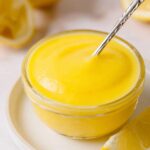
Homemade Lemon Curd Recipe
- Prep Time: 10 minutes
- Cook Time: 10 minutes
- Total Time: 20 minutes
- Yield: 26 tablespoons
- Category: Condiment
- Method: Stovetop
- Cuisine: American
- Diet: Vegetarian
Description
This classic Lemon Curd recipe is tangy, creamy, and bursting with bright citrus flavor. Made from simple ingredients like fresh lemons, sugar, eggs, and butter, this smooth and thick curd is perfect as a spread or filling for cakes, tarts, pies, and breakfast treats such as scones. It’s quick to prepare and far tastier than store-bought versions.
Ingredients
Main Ingredients
- ⅔ cup sugar
- 1 large egg
- 2 large egg yolks
- ⅓ cup lemon juice (from about 2 lemons)
- 1 lemon zested
- ⅛ teaspoon sea salt
- ⅓ cup butter (cold and cubed)
Instructions
- Combine Ingredients: In a medium saucepan, whisk together the sugar, whole egg, egg yolks, lemon juice, lemon zest, and sea salt until the mixture is smooth and no pieces of egg remain. Using a non-metal saucepan like a ceramic-coated one is recommended to avoid imparting a metallic flavor.
- Cook the Curd: Place the saucepan over medium-low heat and stir frequently to prevent the mixture from burning on the bottom. Continue cooking until the curd thickens and begins to bubble, indicating it is cooked through.
- Add Butter: Remove the pan from heat and immediately transfer the curd to a non-metal heat-safe container or strain it if lumpy. Add the cold cubed butter and stir or whisk until the butter is completely melted and the curd is smooth and glossy.
- Chill and Store: Cover the surface of the lemon curd directly with parchment paper or plastic wrap to prevent a skin from forming. Refrigerate for about 1-2 hours until chilled and further thickened before serving.
Notes
- This lemon curd balances rich butter and eggs with bright lemon acidity, creating a creamy, tangy flavor that’s ideal for spreading or filling.
- For best results, use fresh lemons and cold cubed butter to achieve smooth texture and rich flavor.
- Use a non-metal container to prevent metallic taste and skin formation on top by covering curd surface directly.
- The recipe yields about 1 ½ cups (approximately 26 tablespoons) of curd, suitable for multiple uses like tarts, cakes, or breakfast items.
- Store the lemon curd in the refrigerator and consume within 1 week for optimal freshness.
Nutrition
- Serving Size: 1 tablespoon
- Calories: 48 kcal
- Sugar: 5 g
- Sodium: 33 mg
- Fat: 3 g
- Saturated Fat: 2 g
- Unsaturated Fat: 1.2 g
- Trans Fat: 0.1 g
- Carbohydrates: 5 g
- Fiber: 0.01 g
- Protein: 0.5 g
- Cholesterol: 28 mg


Leave a Reply